
Duck Raising
Understanding Duck Egg Production
How duck eggs differ from chicken eggs, when ducks start laying, which breeds are known as layers, and how to collect and handle duck eggs safely.
Published 3 min read
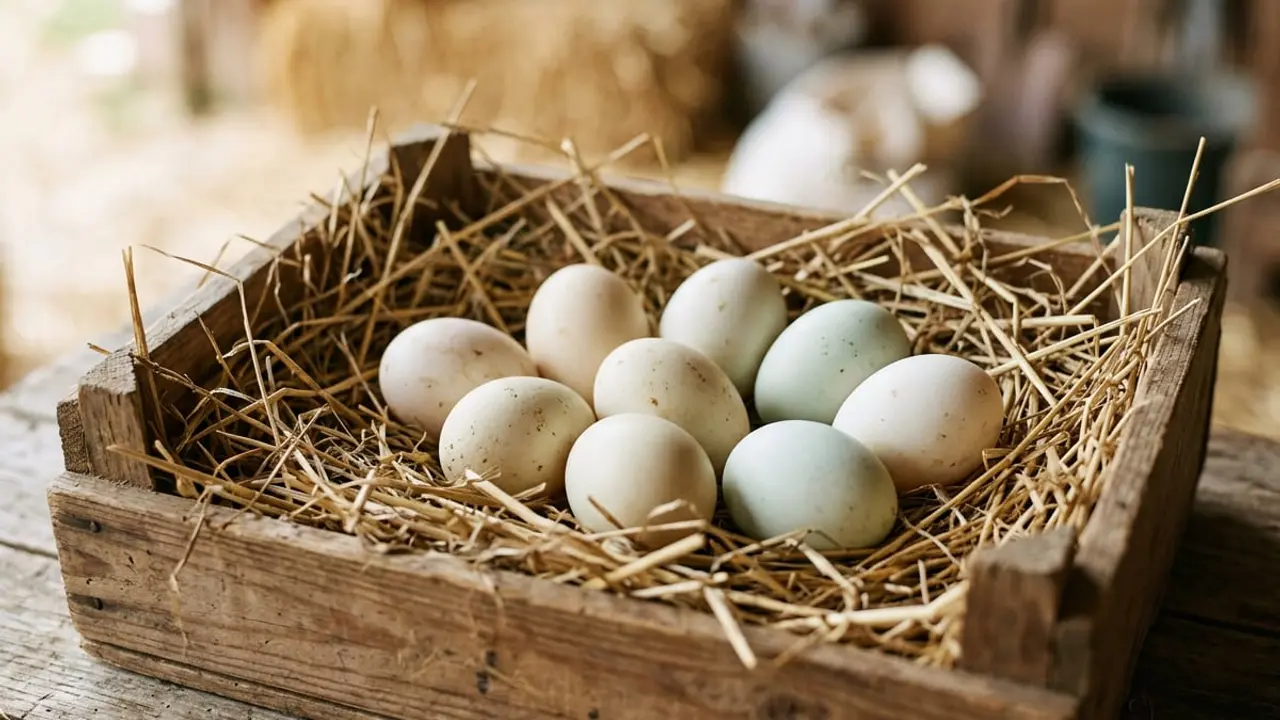
Duck eggs are less familiar than chicken eggs in most American kitchens, but they have a loyal following among bakers and home cooks. If you are thinking about keeping ducks for eggs, or just curious about what makes their eggs different, here is an overview.
How duck eggs compare
| Duck eggs | Chicken eggs (large) | |
|---|---|---|
| Typical weight | Often around 70 grams | Roughly 50 to 60 grams |
| Shell | Thicker and harder | Thinner |
| Yolk | Larger in proportion to the white | Smaller in proportion |
| Per egg | More fat, protein and calories | Less of each |
Shell colors range from white and cream to pale blue-green or even gray, depending on breed and the individual duck.
Because duck eggs are larger and richer, many bakers like them in cakes, custards and pastas. When you substitute them for chicken eggs, adjust by weight rather than count.
A note on allergies: some people who react to chicken eggs also react to duck eggs, and the reverse can be true. Anyone with an egg allergy should talk with their doctor before trying a different kind of egg.
When ducks start laying
Many ducks begin laying at around five to seven months of age, depending on breed, nutrition and the time of year. Like chickens, ducks respond to day length. Laying usually increases in spring and slows as days grow short.
Breeds and egg production
Breed makes a big difference:
- Khaki Campbell and Indian Runner ducks are well known as productive layers.
- Pekin ducks are raised mostly for meat but do lay a moderate number of large eggs.
- Many heritage and ornamental breeds lay fewer eggs, often seasonally.
Individual birds vary, so treat any published “eggs per year” figure as a rough guide.
Morning layers
Ducks tend to lay early in the morning, often before or around sunrise. Unlike chickens, many ducks won’t reliably use a nest box and may lay wherever they happen to be. Keeping ducks in their shelter until mid-morning makes eggs much easier to find and keeps them cleaner.
What laying ducks need
- A balanced diet. A waterfowl or layer ration with access to extra calcium supports strong shells.
- Water deep enough to dunk their heads. Ducks clean their eyes and nostrils this way. A full pond isn’t required, but a shallow dish isn’t enough.
- Niacin for ducklings. Young ducklings need more niacin (vitamin B3) than chicks. Many keepers use a waterfowl starter feed or a niacin supplement for this reason.
- Dry bedding and secure shelter at night. Ducks are messy with water, and they are just as vulnerable to predators as chickens.
Collecting and handling duck eggs
- Collect eggs every morning.
- Discard eggs with cracked shells.
- If an egg is dirty, brush or dry-clean it. If you must wash it, use water warmer than the egg, then dry it.
- Refrigerate eggs promptly and keep them cold.
- Cook until both the white and yolk are firm, as you would with chicken eggs.
Duck eggs, like all eggs, can carry Salmonella. Wash your hands after handling birds or eggs.
Thinking about selling eggs?
Selling eggs, even in small quantities, may involve state requirements for handling, grading, labeling and storage. In North Carolina, check with the North Carolina Department of Agriculture and Consumer Services (NCDA&CS) before offering eggs for sale.
Helpful resources
Farm Journal articles share general information for home growers and small-flock keepers. They are not professional veterinary, legal or food-safety advice. For guidance specific to your situation, contact NC State Extension or a licensed professional.